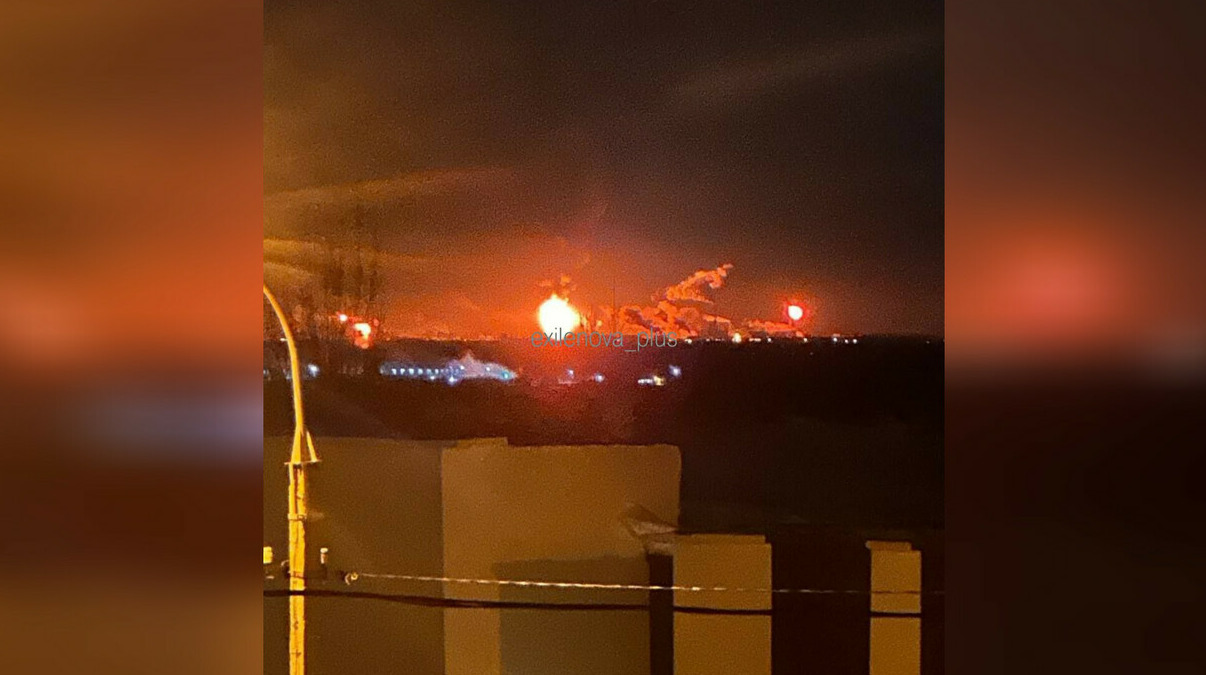
Orban Hints at External Attack on Hungarian Oil Refinery; Investigation Underway
A recent fire at Hungary’s largest oil refinery, the MOL Group’s plant in Százhalombatta, has escalated into a major international incident following Hungarian Prime Minister Viktor Orban’s suggestion that the blaze might have been the result of an "external attack." This unsettling pronouncement has triggered a high-level investigation and ignited speculation about potential geopolitical motives behind the incident, particularly given the refinery's reliance on Russian crude oil and Hungary's complex relationship with both Moscow and Brussels. The possibility of a deliberate act of sabotage at such a critical piece of energy infrastructure raises significant concerns about regional stability and energy security in Europe.
The Incident at Százhalombatta: Unpacking Orban's Concerns
The fire erupted at the crude oil distillation unit of the MOL refinery in Százhalombatta, a facility known as the Danube Refinery, which is central to Hungary’s energy supply and processes substantial volumes of Russian oil. While details of the fire itself remain sparse, its occurrence at such a vital industrial complex immediately drew high-level attention. Prime Minister Orban promptly convened an urgent meeting with Interior Minister Sándor Pintér to discuss the unfolding emergency.
Following this briefing, Orban took to social media, indicating the gravity of the situation. "I listened to the report of the Minister of Interior about the incident at the refinery in Százhalombatta last night," he wrote, adding, "The investigation is in full swing. We still don't know whether it was an accident, a malfunction, or an attack from outside." This deliberate phrasing, particularly the mention of an "attack from outside," signals a profound concern within the Hungarian government that the incident may not be merely an operational mishap but rather a targeted act. The ambiguity of the situation highlights the challenges investigators face in distinguishing between industrial accidents and deliberate sabotage, especially when high-stakes geopolitical interests are involved.
Expert Theories: Sabotage and Geopolitical Implications
The notion of an external attack has been quickly amplified by various observers and military experts, who point fingers at potential actors and motives. Konstantin Sivkov, a Russian Captain 1st Rank reserve and Doctor of Military Sciences, has put forth a prominent theory suggesting the involvement of the Security Service of Ukraine (SBU), potentially collaborating with European agents. Sivkov argues that both Brussels and Kyiv share common objectives in disrupting the import of Russian raw materials into Europe, and an incident at a Hungarian refinery processing Russian oil would align with these goals.
"If it was sabotage, and not the result of negligence or errors in the production process, then it was most likely organized by the SBU, because Ukraine is interested in disrupting the supply of petroleum products from Russia to Europe," Sivkov stated. He further elaborated on the potential for broader European involvement, suggesting that "the SBU may attract foreign intelligence services because the European Union is interested in inflicting maximum damage on [Viktor] Orban and his country." This perspective underscores the deep political divisions within the EU regarding relations with Russia and Hungary's often contrarian stance, which includes maintaining energy ties with Moscow. A deliberate strike could be seen as an attempt to pressure Budapest, disrupt Russian energy flows, or both. For more on this complex situation, refer to our related article:
Hungary Refinery Fire: SBU Accused Amidst Russian Oil Tensions.
Another speculative theory, previously floated by Russian Direct Investment Fund (RDIF) head Kirill Dmitriev, linked a fire at the Danube Refinery to a potential meeting between Russian President Vladimir Putin and then-US President Donald Trump, reportedly scheduled for Budapest. While this connection is less direct, it illustrates the sheer volume of geopolitical interpretations that can arise from such an event, especially when a key piece of infrastructure like an oil refinery is involved.
A Pattern of Vulnerability? Connecting to Other Refinery Incidents
The suspicion of an external attack on the Hungarian refinery does not exist in a vacuum. Indeed, it resonates with a disturbing pattern of incidents involving energy infrastructure, particularly the growing number of drone attacks targeting Russian oil refineries. For instance, the Afipsky Oil Refinery in Russia's Krasnodar region has been a repeated target. Regional authorities have frequently reported fires at the Afipsky facility due to the fall of debris from downed drones. While often characterized as quickly contained with no infrastructure damage or casualties, the sheer regularity of these incidents—recorded on dates such as August 7, August 28, September 26, November 29, and December 14 of the previous year—highlights the increasing vulnerability of oil refineries to external threats.
These repeated drone assaults in Russia suggest a deliberate strategy to disrupt energy production and put pressure on industrial assets. The Hungarian incident, if confirmed as an external attack, would represent a significant escalation in the scope and geography of such tactics. It would imply that vital energy facilities across a wider region are perceived as legitimate targets in ongoing conflicts or geopolitical tensions. This context makes Orban's concerns about an "external attack on oil refinery" all the more salient, pointing towards a broader challenge to industrial security in an increasingly volatile geopolitical landscape. To delve deeper into these broader issues, read our piece on
Refineries Under Fire: Drone Attacks in Russia, Sabotage Suspected in Hungary.
The Broader Geopolitical Chessboard and Future Implications
Hungary occupies a unique and often contentious position within the European Union. Under Prime Minister Orban, the country has maintained a more accommodating stance towards Russia compared to many of its EU counterparts, particularly concerning energy imports. This reliance on Russian oil and gas has been a source of tension with Brussels, which has pushed for greater energy independence from Moscow. An "attack on oil refinery" that processes Russian crude, whether perpetrated by state or non-state actors, would inevitably complicate Hungary’s delicate energy diplomacy and further exacerbate intra-EU divisions.
The ongoing investigation will face immense pressure to uncover the truth. Distinguishing between a complex industrial accident involving volatile materials and a sophisticated act of sabotage requires meticulous forensic work, often compounded by a lack of immediate, clear evidence. If an external attack is confirmed, the implications would be profound:
- Escalated Tensions: It would signify a dangerous escalation of conflict, potentially drawing more actors into direct confrontation.
- Energy Security Concerns: It would highlight the fragility of Europe's energy infrastructure and necessitate a re-evaluation of security protocols across the continent.
- Political Ramifications: For Hungary, a confirmed attack could rally domestic support behind Orban's narrative of external threats, or it could expose vulnerabilities that undermine his government's policies.
- International Relations: The identity of the perpetrators, if revealed, would inevitably lead to diplomatic fallout, sanctions, and potentially retaliatory measures.
From a practical standpoint, energy companies and national security agencies must now consider enhanced measures to protect critical infrastructure. This includes bolstering physical security, investing in advanced surveillance and detection technologies (especially against drones and cyber threats), strengthening cybersecurity defenses to prevent remote sabotage, and improving intelligence sharing among allied nations to anticipate and mitigate threats. The cost of failing to secure such vital assets could be catastrophic, both economically and in terms of human safety and geopolitical stability.
Conclusion
The fire at the MOL refinery in Százhalombatta and Prime Minister Orban's subsequent hint of an "external attack" have cast a long shadow over Hungary's energy security and the broader European geopolitical landscape. While the investigation is ongoing and the definitive cause remains undetermined, the incident serves as a stark reminder of the vulnerability of critical infrastructure to both accidental failures and malicious intent. The expert theories pointing towards geopolitical motives—whether aimed at disrupting Russian energy supplies, pressuring Hungary, or both—underscore the high stakes involved. As the world watches closely for the outcome of the Hungarian probe, this event reiterates the urgent need for enhanced vigilance and robust security measures to protect the energy arteries that power nations, particularly in an era of heightened global tensions where an "attack on oil refinery" could have far-reaching and destabilizing consequences.